
Jim Crane was less than twenty seconds into his introduction of Tatsuya Imai when he turned to the front row and thanked a sponsor.
“One of the things that made this possible,” the Houston Astros owner said at Daikin Park on January 5, “is with our great partners in the front row.” He then asked Takayuki Inoue, the chief marketing officer of Daikin—the Japanese HVAC company whose name adorns the ballpark under a 15-year, $140 million naming rights deal—to stand up. “Thank you, sir.”
Imai stood nearby in his new No. 45 jersey, smiling through an interpreter.
It was a telling moment. The Astros had just signed their first-ever pitcher directly from Nippon Professional Baseball—a three-time All-Star who went 10-5 with a 1.92 ERA for the Seibu Lions in 2025, who posted the lowest WHIP in the Pacific League and struck out 178 batters in 163.2 innings. A pitcher good enough that Scott Boras, the veteran agent who represents Imai, negotiated a $54 million guarantee with opt-outs after both 2026 and 2027. And the first thing Crane wanted the room to know was that Daikin helped make it happen.
Crane later told reporters the Astros would be “laser focused” on the Asian market going forward. He had visited Japan the previous summer to tour Daikin’s facilities. The business rationale for a Japanese star playing in a Japanese-named ballpark was obvious to everyone in the room.
What was less obvious—and what has become painfully clear in the months since—is whether the Astros were ready to actually support the player they’d just signed.
First in Line, Last in Experience
Imai arrived in Houston as the fourth Japanese-born player in Astros history, following Kaz Matsui, Norichika Aoki, and Yusei Kikuchi. The difference is significant: Each of those players arrived in Houston having already logged time in the major leagues. None came straight from Japan. Imai did.
That distinction matters. Teams that have developed reputations as good landing spots for Japanese players—the Dodgers, Mariners, Cubs, Yankees, Red Sox—have built out infrastructure over years and multiple players: Japanese-speaking training staff, cultural liaisons, organizational knowledge passed down from one signing to the next. The Astros had none of that institutional memory.
Lost in Translation
Three starts into his Astros career, Imai was shut down with right arm fatigue. In the conversation that followed, something went wrong before it ever reached the public.
Speaking through his interpreter, Shio Enomoto, Imai said he was struggling to adjust to American life outside of baseball: the travel, the timing of meals, the rhythms of an MLB schedule. Enomoto’s rendering of those comments landed harder than Imai apparently intended. “He’s not able to adjust to the American lifestyle,” Enomoto said. “Baseball and outside of baseball.”
The quote spread quickly. Scouts discussed Imai’s makeup. Fans questioned his readiness. Agents wondered aloud whether the Astros had known about these concerns before signing him.
Adding another layer, Rome later revealed that Imai was already on his third interpreter since reporting to spring training on the first day of camp. “I think it should be noted that this is his third interpreter since he reported to spring training on the first day of camp,” Rome said on Foul Territory. “I’m not sure if that has some impact here that he has now had three different interpreters relaying to him what is being said and vice versa. Reading between the lines, it sounds like a guy who’s just struggling to adapt.”
Kikuchi, Imai’s former NPB teammate whose positive experience in Houston had helped draw Imai there, watched the interview and said through his own interpreter that he felt something had been “lost in translation.” Boras said he heard the same reaction from Japanese speakers. “That’s really not what he was saying,” Boras said.
Rome also flagged the discrepancy, pointing to context from both Kikuchi and Boras suggesting Imai had been conveying something more benign—the ordinary difficulty of adjusting to a new country—than the words as rendered implied. Three interpreters in one spring will do that.
Learning on the Fly
The communication breakdown didn’t happen in a vacuum. When Imai reported to spring training, his personal trainer, who is a key part of his support system, was delayed by visa issues and arrived late. The Astros, to their credit, made efforts to welcome him. Manager Joe Espada consulted other managers who had worked with Japanese players. Teammate Ryan Weiss, who spent two seasons in the Korean Baseball Organization, organized a dinner for Imai. The club shared a Japanese word of the day during camp.
These were genuine efforts. They were also the efforts of an organization learning on the fly.
Compare that to the White Sox’s recruitment of Munetaka Murakami this past offseason. Chicago’s front office crafted a detailed pitch, solicited honest feedback from Murakami and his representatives, and, upon learning Murakami noted the absence of bidets in the home clubhouse, installed them. “We’re not going to have this perfect out of the gate,” White Sox GM Chris Getz told The Athletic. “But there is an intention and willingness to continue to improve what needs to be improved.” Murakami currently leads the majors in home runs.
Weiss’s KBO experience gave him more cross-cultural awareness than most of his teammates. But Korea is not Japan, and the KBO is not the NPB. The two leagues share a Pacific Rim address and little else—NPB pitchers work on a weekly rotation and largely go home on off days, a rhythm closer to a 9-to-5 than the grind Imai now faces every five days. The dinner was a kind gesture from a teammate who understood, at least in part, what it felt like to be the foreigner in the room.
What’s at Stake
The numbers from Imai’s three starts before the IL tell the story plainly enough: a 7.27 ERA and just one out and walking four in his final outing April 10 in Seattle before he was shut down. In the big leagues, he has leaned almost exclusively on two pitches—his four-seam fastball at 48% and his slider at 43%—abandoning the arsenal that made him dominant in Japan. General manager Dana Brown has noticed. “If he could command his two pitches very well, and every now and then execute the third or fourth pitch, I think he’s gonna be fine at this level,” Brown told MLB.com. “But you can’t run away from your best pitches.”
Brown’s pep talk aside, MLB.com’s Brian McTaggart put the situation more plainly: The Astros have no other choice but to return Imai to the rotation. He’s healthy. He’s under contract for $54 million. And their rotation, with seven starters on the injured list, is in no position to be selective.
Imai makes his return Tuesday against the Seattle Mariners, his first big-league appearance since April 13. His two rehab starts at Triple-A Sugar Land were shaky: He walked five in three innings in his last outing, throwing just 27 of 63 pitches for strikes. Espada said last week that Imai seems to be “in a much better place,” and Boras has said his client “is very happy in Houston, and very happy pursuing a dream.”
His trainer is now with him. The visa issues have been resolved. The Astros, who enter the Seattle series at 16-25 and desperately in need of rotation stability, are counting on the pitcher they signed in January to finally be that pitcher.
Imai holds opt-outs after both 2026 and 2027. If his experience in Houston sours, on or off the mound, he can leave. A bad ending here doesn’t just cost them Imai—it costs them credibility in every market they claim to want.
Crane said the Astros will be laser focused on the Asian market. For that to mean anything, they’ll need to show they know how to take care of the player already in their building.
Heading to Daikin Park soon? Check the Astros promotions schedule before your next game.
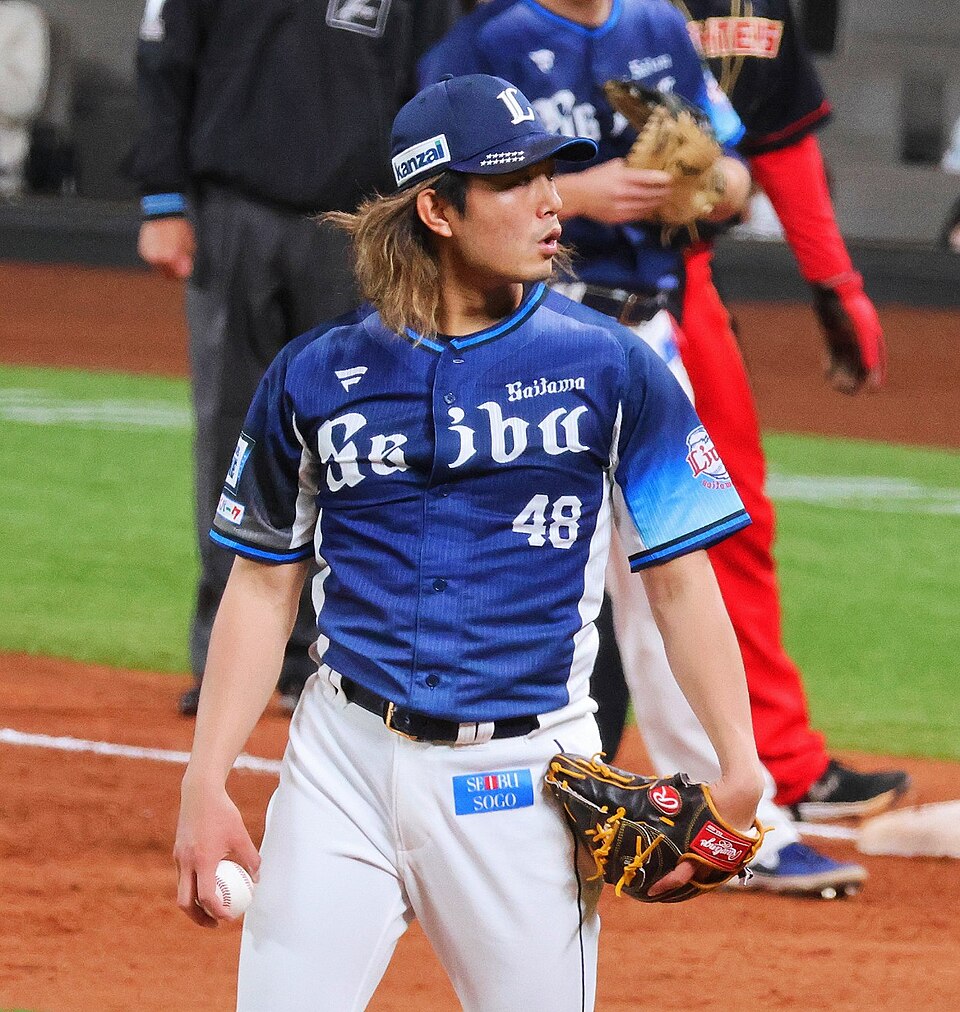
Photo credit: Masatokun555 via Wikimedia Commons (CC BY-SA 4.0)