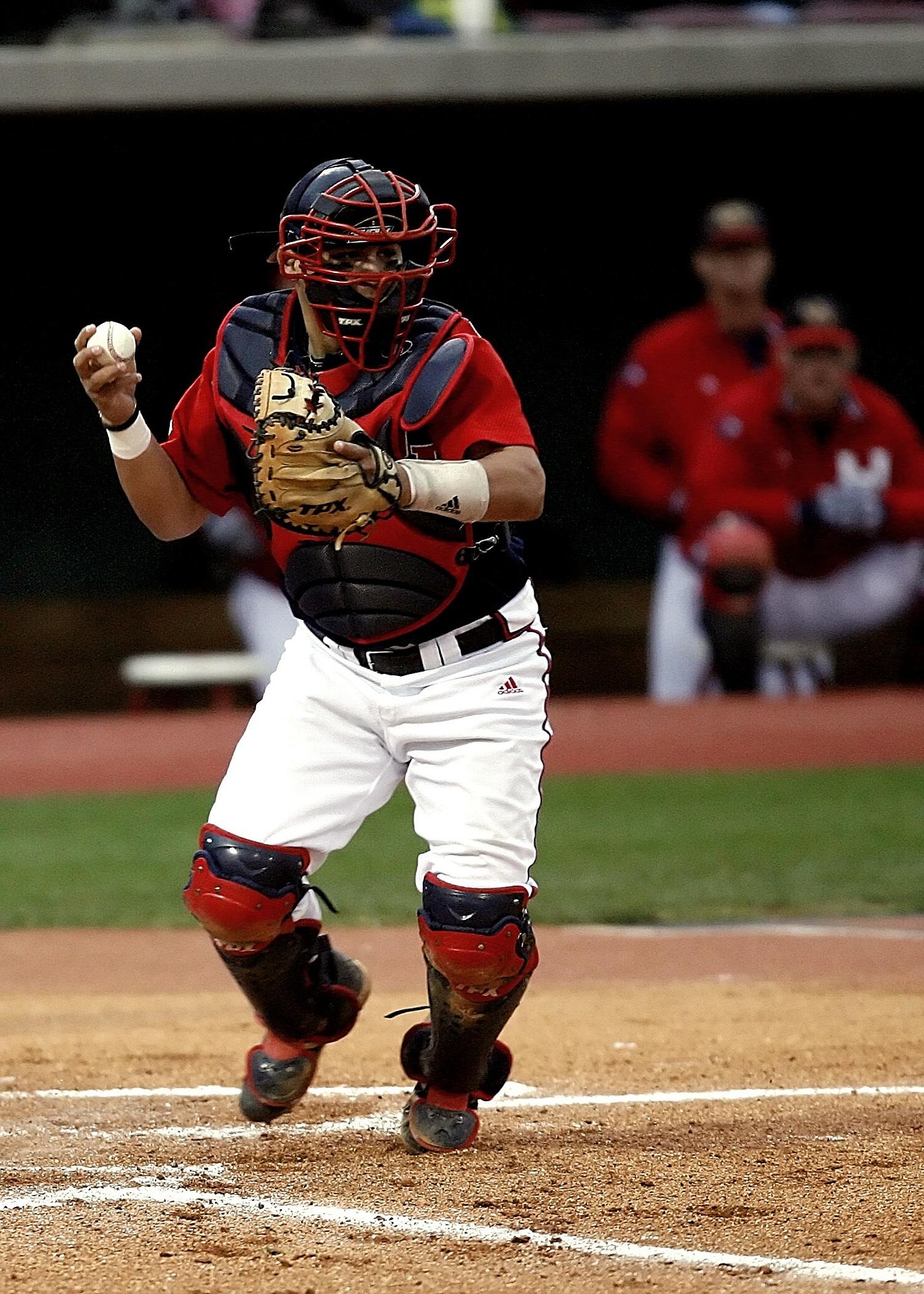

WEST PALM BEACH, Fla. — The trade market for Isaac Paredes has cooled. The Astros’ infield logjam has not.
As spring training enters its third week, the two-time All-Star third baseman remains in an Astros uniform, taking reps at second base while waiting for a resolution that hasn’t come.
According to Ken Rosenthal of The Athletic, only one team currently appears to have a clear need for a player like Paredes. Meanwhile, WEEI’s Rob Bradford reported there is “no momentum” on the Paredes front for Boston, “zero, zero, zero.”
That’s a problem for Houston, because the math hasn’t changed.
The Astros have Carlos Correa at third base, Jose Altuve at second, Jeremy Peña at shortstop, Christian Walker at first, and Yordan Alvarez entrenched at designated hitter. There is no clean spot for a player who hit 20 home runs and posted an .810 OPS in 102 games last season.
Houston spent much of the winter trying to solve the puzzle.
Chandler Rome and Ken Rosenthal reported the Astros discussed Paredes with as many as five teams, including the Pirates and Red Sox, while also pursuing a left-handed hitting outfielder as part of a potential return.
One framework nearly came together. A three-team deal would have sent Brendan Donovan from St. Louis to Houston, Paredes to Boston, and a prospect package to the Cardinals. St. Louis ultimately went in a different direction, sending Donovan to Seattle instead.
Talks with Pittsburgh also had some structure. Former No. 2 overall pick Joey Bart was part of trade discussions between the Pirates and Astros, a move that would have strengthened Houston’s catching depth while clearing the infield logjam. That deal never materialized either.
General manager Dana Brown has publicly insisted the Astros are not motivated to trade Paredes, pointing to the offensive impact he provided before his hamstring injury last July.
Behind the scenes, however, Houston spent much of the offseason attempting to move either Paredes or Walker. Walker’s $20 million salary has proven difficult to move, leaving Paredes as the most logical trade chip, provided the Astros can find a return package they actually like.
For now, Paredes remains in camp and is getting work at second base. Manager Joe Espada has indicated he hopes to give Altuve more rest this season, making second the most realistic path to playing time if Paredes stays.
Paredes himself has taken the uncertainty in stride.
“I only control what I do on the field,” he said when camp opened. “That’s the part I’m focused on. Whatever they’re going to do, that’s out of my control.”
He’s familiar with the process. Paredes has already been traded four times before turning 27.
The calculus shifted slightly last week when Peña was diagnosed with a fractured right ring fingertip and placed on a two-week reevaluation timeline. With the Astros’ shortstop situation suddenly uncertain, Paredes’ infield versatility becomes more valuable, not less—and the case for trading him before Opening Day becomes harder to make. A player who can slide around the infield is exactly what you want in your back pocket when your starting shortstop is hurt.
The only question now is whether Houston finds a partner before Opening Day or carries the unresolved situation into the season.