




















WEST PALM BEACH, Fla. — Tony Perezchica has spent years working angles at third base, adjusting his positioning to read caroms, track outfielders, and avoid screaming line drives.
This spring, those angles are shrinking.
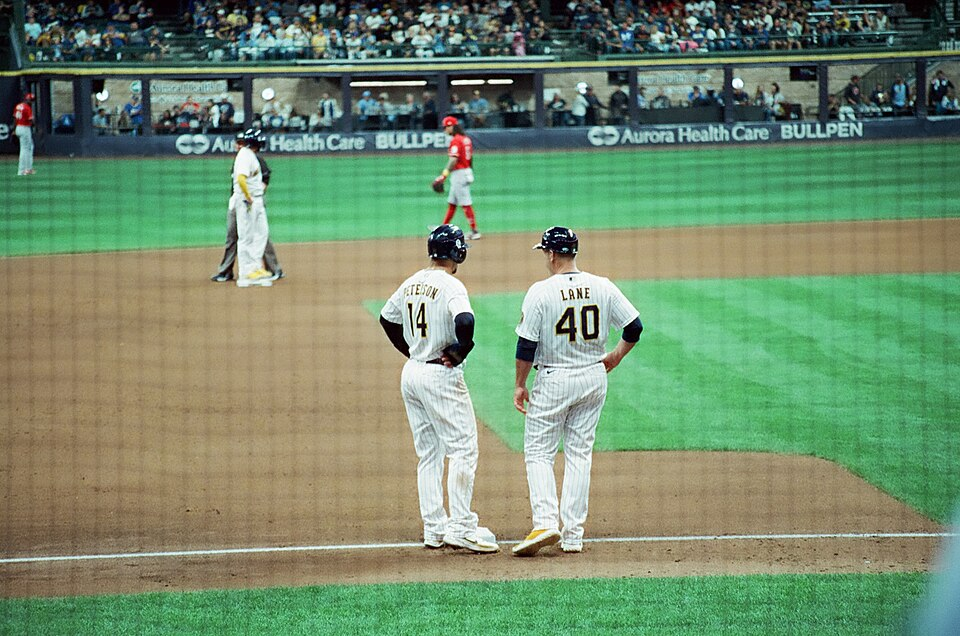
Major League Baseball’s new rule requires base coaches to remain inside their designated coaching boxes until the pitch is thrown, limiting the freedom of movement that has long been part of the job description. For Perezchica, that means rethinking habits built over seasons in the box.
“I know most of us as third-base coaches, we like to get some kind of visual of the whole field and at the same time have the liberty of being able to go to certain spots where you’re out of harm’s way with the line drives, number one, and number two, be in a better position to allow us to see the play as much as we can,” Perezchica said.
Those two priorities—safety and sightlines—now take a back seat to MLB’s effort to regulate positioning before the pitch.
Why the Rule Changed
League owners approved the measure after complaints surfaced last season and into the World Series about coaches straying outside their boxes. While recognizing pitch-tipping remains legal, MLB officials were concerned that some coaches were using expanded positioning to gain improved looks at opposing pitchers.
According to ESPN, the issue centered on coaches shifting along the baseline or edging toward the field with runners on base, movements that could serve dual purposes: preparing for advancing plays and potentially spotting tells.
The sensitivity around the subject surfaced publicly last August at Fenway Park. Astros reliever Héctor Neris exchanged words with Boston third-base coach Kyle Hudson after intentionally balking a runner from second to third, leading to a brief bench-clearing incident.
When asked whether he believed Boston was relaying signals, Neris offered a measured response: “Maybe yes, maybe no.”
The moment underscored how delicate the topic remains across the league.
A Game of Angles
For Perezchica, positioning has always been strategic. With runners aboard, he aims to create clean sightlines—visual “triangles” between the ball, converging fielders, and his runner—to make split-second decisions on whether to send or hold.
That flexibility disappears while the pitcher is on the rubber. Coaches must remain inside the painted rectangle until the ball leaves the pitcher’s hand. Once it’s in play, movement is permitted.
“Without that now, I’m sure there’s going to be a lot of third-base coaches that are going to have to adjust and do the best adjustments that we can,” Perezchica said.
First-base coach Dave Clark is also affected by the change, though third base typically carries the higher-stakes decisions.
Manager Joe Espada, who previously served as a third-base coach for the Marlins and Yankees, supports the adjustment.
“Clarkie and Tony have never had that issue; they will stay in the box,” Espada said. “Tony, once the pitch is delivered and the ball is put in play, he can exit the box and put himself in a good spot.”
Enforcement and Adjustment
Umpires are expected to issue a warning for a first violation, with potential ejection for repeated infractions. Perezchica said he hopes there will be patience as coaches learn the exact boundaries of enforcement.
“We’re going to ask questions during spring training so we know where we can stand,” he said. He added that he hopes there will be “some kind of leniency” early in the process.
Spring training offers a testing ground before full enforcement begins when the regular season opens March 26.
For Perezchica, the task over the next several weeks is straightforward: adapt within the box, maintain his sightlines, and continue making the decisions that can swing games. The painted lines may be fixed, but the adjustments are already underway.