








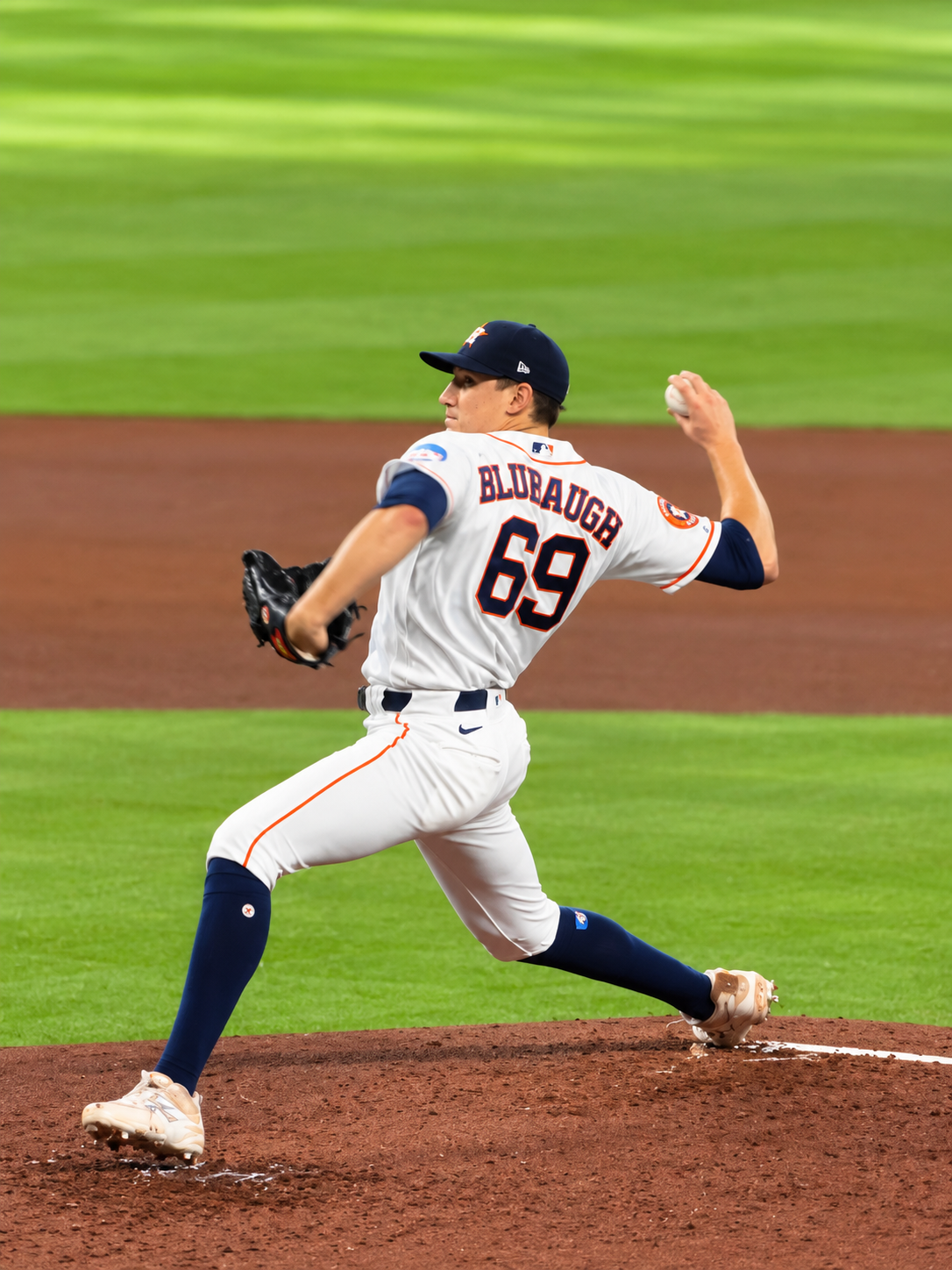





WEST PALM BEACH, Fla. — AJ Blubaugh wanted to connect with his new teammate. Tatsuya Imai, the star Japanese pitcher who signed with Houston in January, has an interpreter who follows him everywhere. But Blubaugh decided to try making contact directly.
“How do you say ‘Good morning’ in Japanese?” Blubaugh asked.
“Ohayo,” Imai replied.
“Ohio, that’s where I’m from!” Blubaugh exclaimed.
A simple exchange, an accidental coincidence, and suddenly two pitchers from opposite sides of the Pacific had found common ground. It’s exactly the kind of moment the Astros are trying to cultivate this spring as they navigate one of baseball’s most diverse rosters.
Four Languages, One Clubhouse
Houston has fielded the most internationally born players on Opening Day in each of the past five seasons, including 16 last year. This spring training roster features players from eight countries—the United States, Dominican Republic, Puerto Rico, Mexico, Venezuela, Japan, Cuba and Taiwan—speaking four different languages: English, Spanish, Japanese and Mandarin.
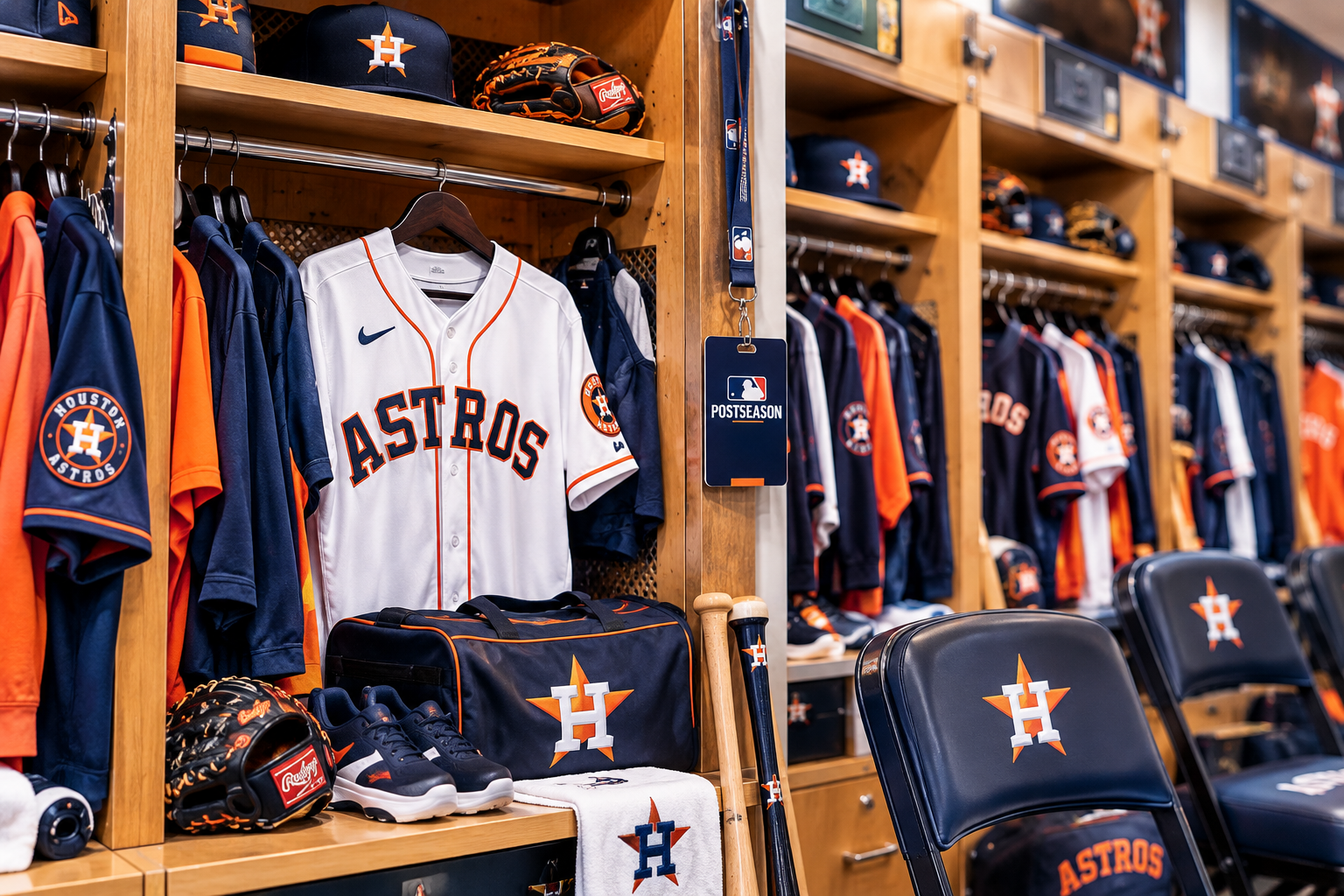
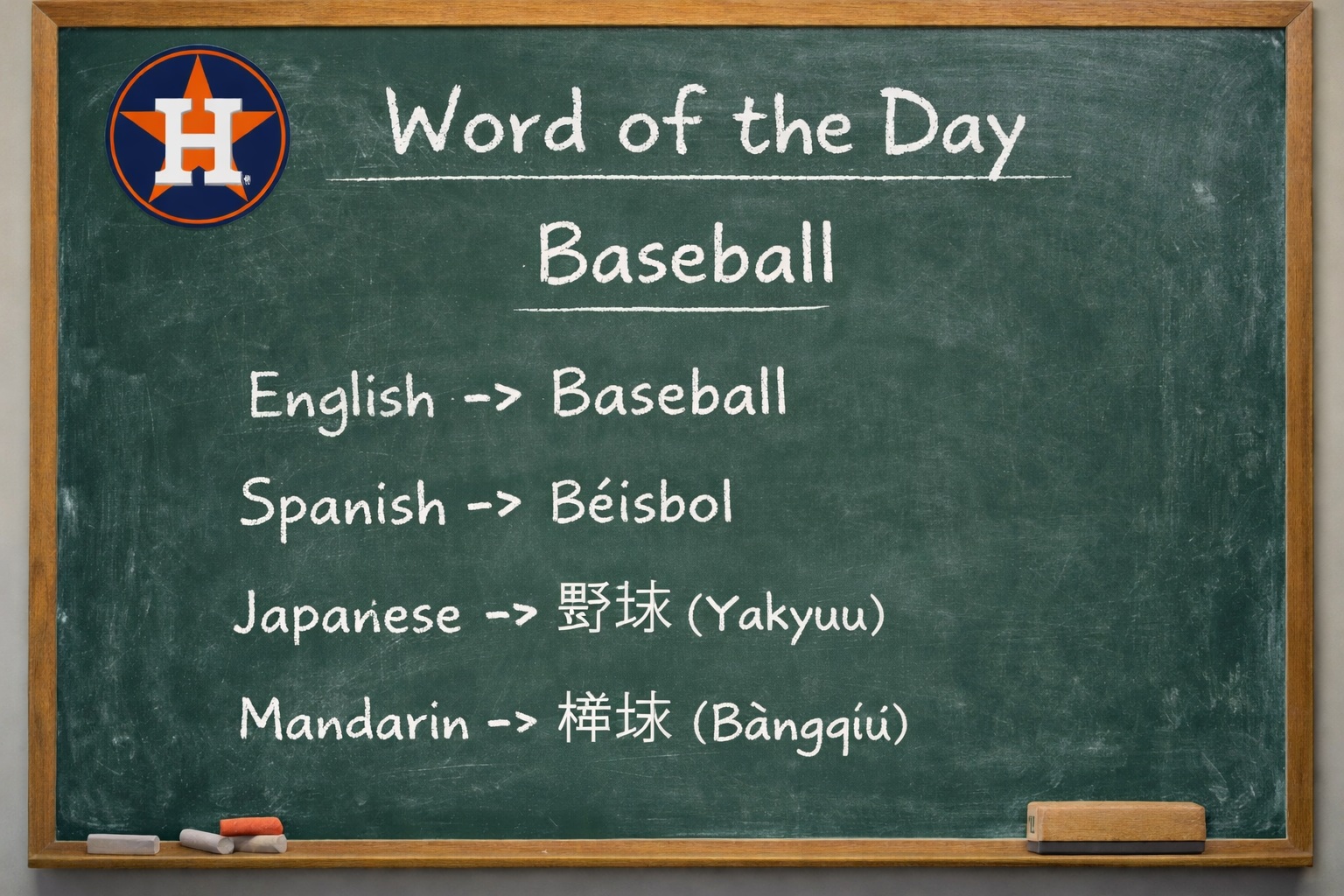
In a sport where split-second communication can mean the difference between a double play and a bases-loaded jam, those language barriers present real challenges. So the Astros have installed a teaching tool in the clubhouse: every day, a white chalkboard displays the Word of the Day written in all four languages.
Team travel director Juan Huitron selects the daily words. On the first day of camp, “baseball” appeared alongside its translations: “beisbol” in Spanish, “yakyuu” (yahk-koo) in Japanese, and “bangqui” (bong-cho) in Mandarin. Since then, players have learned “hello,” “food,” “friend” and other basics, complete with pronunciations.
Manager Joe Espada has committed to learning some Japanese himself.
“I’m trying to do my best,” Espada said. “It’s going to take some time. We’re all trying to learn some, not only Japanese but also Mandarin.”
His goal is ambitious: “At the end of camp to be able to string some sentences together. The players really love that we’re trying.”
Building Bridges
Blubaugh has taken the challenge seriously, even if his pronunciation needs work.
“I did learn ‘good morning’ in Japanese is ‘ohayo,’ which is actually where I’m from,” he said. “So I got that one locked up. And obviously, ‘konnichiwa’ is ‘hello.’ So we’re getting there. I’m trying to put together some words and phrases. I got some pronunciation things to work on, but we’ll get there.”
The initiative extends beyond simple vocabulary. Spencer Arrighetti has been learning about Imai through his interpreter, Ryo Takagi, asking about Japanese baseball culture, spring training preparation, and even Imai’s slider grip.
“He’s obviously a very, very hard worker and he’s really good at what he does and he’s really process-oriented in what he knows works for him,” Arrighetti said. “I’ll ask his translator about a thing or two here or there, and I’ll get an answer from [Imai] about it. It’s cool.”
Imai, 27, was a three-time NPB All-Star and emerged as an ace-level pitcher in Japan over the past several years. He’s the fourth Japanese player to wear an Astros uniform and the first since Yusei Kikuchi spent the final two months of 2024 with Houston. Imai is working on his English vocabulary the same way his teammates are tackling Japanese.
“I’ve just got to go little by little every day, just accumulating little small words,” Imai said through Takagi. “Just like Yusei Kikuchi, who’s now able to have conversations with others, and that’s where I’m at.”
Taiwanese pitcher Kai-Wei Teng, acquired in a trade from the Giants, brings Mandarin to the clubhouse mix. Both Imai and Teng will have their interpreters join them for mound visits during games to ensure clear communication with Espada and the coaching staff.
But spring training is about more than X’s and O’s. It’s about teammates learning each other’s stories, preferences, and personalities—the foundation of clubhouse chemistry that can carry a team through a 162-game grind.
Blubaugh gets it. Learning a few Japanese phrases isn’t just about being polite.
“Obviously, he’s a great baseball mind, and you can tell that by the way he pitches and the way he goes about his business,” Blubaugh said of Imai. “So I feel like anything I could pick up from him, and the more I could get to know him and say ‘hi’ here and there, we can learn from each other.”
In a clubhouse where music, food, fashion and languages blend from different corners of the world, a simple chalkboard is helping turn diversity into unity—one word at a time.