WEST PALM BEACH, Fla. — The Houston Astros are back on the field, which means it’s time to start paying attention to more than just box scores.
Spring training isn’t about wins and losses. It’s about roles, rhythm, and reading between the lines. With new faces, new rules, and a few unanswered questions, there’s plenty to watch over the next few weeks at CACTI Park.
Here are seven things worth keeping an eye on.
1. How Quickly Does Tatsuya Imai Look Comfortable?
We’ve already seen flashes of what makes Imai intriguing: the deceptive splitter, the unusual slider shape, and the composure against big-league hitters. Live batting practice is one thing. Grapefruit League innings are another.
Does the splitter generate swings when hitters know it’s coming? Does the fastball hold its shape in game situations? How quickly he settles into competitive rhythm could influence early rotation conversations.
2. Who Actually Uses the ABS Challenge System?
The automated ball-strike (ABS) challenge system is no longer theoretical. It’s here.
José Altuve has already tested it. Carlos Correa has opinions about who should be using it. Manager Joe Espada has emphasized leverage.
But when the game speeds up, who taps the helmet? And how disciplined are they with only two challenges per game?
Spring training is the laboratory.
3. The Fifth Starter Conversation
Every spring includes at least one rotation question. This year is no different.
Watch pitch counts more than results. Watch how long outings last. Watch who follows whom out of the bullpen. Clarity rarely comes from one start, but patterns show up quickly.
4. Young Bats Getting Real At-Bats
Brice Matthews. Zach Dezenzo. Joey Loperfido.
Spring gives young hitters consistent reps against major league arms. It’s less about batting average and more about approach. Are they controlling the zone? Are they adjusting mid-at-bat? Are they forcing tougher roster decisions?
If someone pushes for a role, it will start here.
5. How the Outfield Aligns
Spring lineups can look experimental, but they aren’t random.
Who’s getting time in center? Who’s moving between corners? Are certain defensive combinations appearing repeatedly?
Those sixth- and seventh-inning alignments tell a story.
6. Health and Ramp-Up Timelines
Spring optimism is easy. Responsible ramp-up is smarter.
Velocity trends matter. Recovery days matter. Pitch limits matter. If someone builds more gradually than expected, that’s worth noting, even if it’s subtle.
7. Bench Identity
Every roster develops a personality, including the bench.
Is this group built on defensive flexibility? Late-inning power? Speed off the bench? Situational matchups?
Spring usage can quietly reveal what the Astros value when games start to count.
Spring training doesn’t determine championships. But it does answer questions, sometimes quietly.
For the Astros, the next few weeks are less about results and more about clarity.
If you’re watching closely, the clues are usually there.
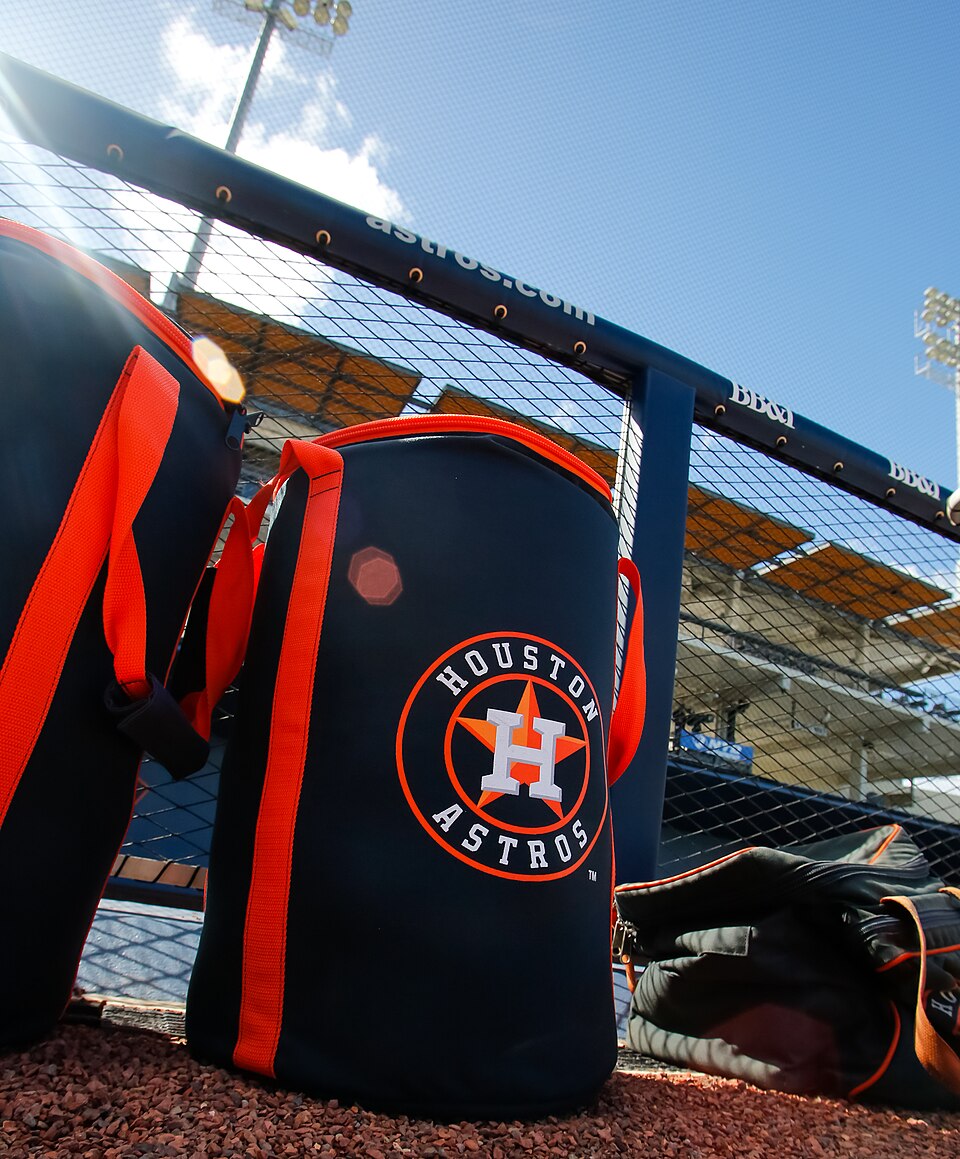
Photo: Astros spring training bags by All-Pro Reels (Ed Sheahin), CC BY-SA 2.0.